How to Plan a Walt Disney World Day Around the Weather, Park Hours, and Early Entry
A real Orlando forecast only goes out about a week. Past that, it's a NOAA average. How to use each one, plus park hours, Early Entry and ticketed party nights, to plan a Walt Disney World day.

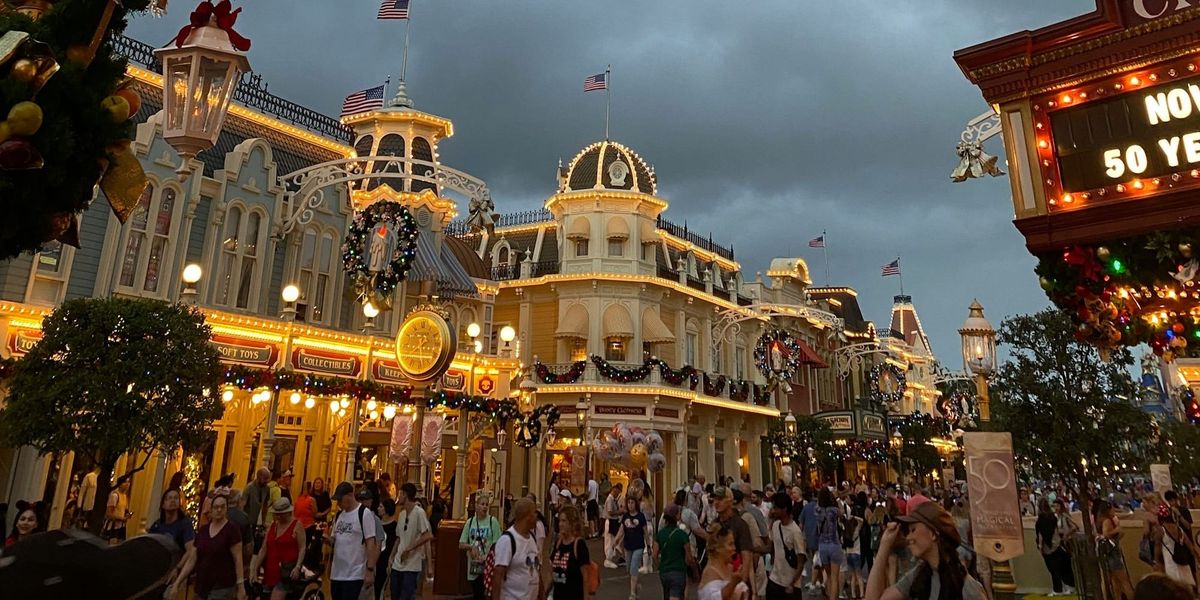
Quick Answer: You can't get a real forecast for a Disney World date until it's about a week away. Before that, any "forecast" is really a 30-year average, which is good for picking dates and not much else. Once the real forecast arrives, plan each day with it and that day's park hours side by side.
Every Disney World planning thread gets to the weather question eventually, usually months before anyone could answer it. How much you can know depends on how far away the trip is. And once it's close, the weather is only half the plan: a park's hours can reshape your day as much as a thunderstorm can.
Here's what we actually do. If it's crazy hot, we take a pool morning at the hotel and start the park day later. If it's pouring, we swap in a Disney Springs day and move the park to another day. That's why we don't buy park days (or a hopper) for every day of the trip: we always keep a few free for the pool, visiting other resorts and Disney Springs.
A real forecast only goes out a week
The National Weather Service's public forecast API covers the next seven days for any location, Orlando included, in 12-hour, hourly or raw grid form. There's no genuine day-by-day forecast past that. Anything claiming to know the weather on a date 11 months away is rounding off long-term averages or guessing.
Inside that week, go hourly. The hourly data gives a chance of rain for each hour, and that's what a park day needs. A 30% chance at 2 p.m. and a 30% chance at 9 p.m. look identical on a daily forecast, but one is a reason to plan an indoor show after lunch and the other is a question about where you'll be for fireworks.
Before that, averages pick your dates
Past the seven-day line, the best anyone can tell you is what a day is usually like. In the 1991-2020 climate normals for Orlando International Airport, Central Florida's rainy season runs roughly June through September, with 14 to 17 days of rain a month against 6 to 8 the rest of the year. The same normals show how much the usual pattern shifts from one month to the next.
| Month | Days with rain | Total rain |
|---|---|---|
| September | 14.2 of 30 (about 47%) | 6.37 in. |
| October | 8.4 of 31 (about 27%) | 3.46 in. |
Days with at least 0.01 inch of rain, from NOAA's 1991-2020 normals for Orlando International Airport, station USW00012815. Last Checked: September 29, 2026.
If you're choosing between two loosely held dates a month apart, that gap is worth weighing. It's still a bet on averages, since neither date has a forecast yet, but it's the only bet on the table that far out. What it shouldn't do is shape your ride order for a day that's still months away.
Check the park's hours as closely as the sky
Park hours move on their own schedule, and they can matter more than the rain. With Early Theme Park Entry, guests at a Disney Resort hotel or one of 15 partner hotels get into any of the four parks 30 minutes before official opening, with a set of attractions, shops and dining running, on every day of the stay. Those offerings are subject to change without notice.
Ticketed evening events squeeze the other end of the day. Mickey's Not-So-Scary Halloween Party runs on select nights between August 7 and October 31, 2026, from 7 p.m. to midnight, with party guests let in as early as 4 p.m., and every 2026 date is sold out.
On party nights in September 2026, Magic Kingdom closed to day guests at 6 p.m., four to five hours earlier than its 10 to 11 p.m. closes on most other nights that month. A clear evening forecast doesn't help much if the park closes to you before sunset.
When the rain wins anyway
Disney's ticket terms make tickets "nonrefundable unless cancelled by Disney," so a rainy day alone won't get your money back. Lightning Lane passes are nonrefundable too, and every Lightning Lane experience is subject to closure without notice. If a ride you've booked shuts for a storm, ask a Cast Member at the ride or Guest Relations what your options are that day. Better still, glance at the hourly rain chances before you pay for Lightning Lane Single Pass on an outdoor ride.
So, how should you plan the day?
Months out, use averages to choose your dates and leave it there. Don't rebuild a touring plan around a "forecast" that's really a 30-year normal. In the last week, plan each day from the hourly rain chances, the park's real hours (with Early Entry, if your hotel qualifies) and whether a party night is shutting Magic Kingdom early. If you're staying somewhere without Early Entry, that 30-minute head start belongs to someone else, which is one more reason to know the hours before you know the forecast.
Our free weather tool for Walt Disney World puts those pieces in one view for a single date: the Weather Service forecast (or NOAA's normals, clearly labeled, past the seven-day window), an hour-by-hour rain outlook, packing suggestions and that day's hours for all four parks, including Early Entry and ticketed events.
Park hours come from ThemeParks.wiki, an unofficial, community-run service that isn't Disney's own data, and the tool says so if it can't reach that source. It's a planning reference, so still check the My Disney Experience app the morning of.
Frequently Asked Questions
Does Early Theme Park Entry still happen if it's raining?
It runs on every day of an eligible stay, check-in and check-out days included, and Disney's Early Entry page doesn't carve out rainy days. It does note that the schedule and the attractions open during that half hour can change without notice.
Stack the Magic uses AI to help research, write, and fact-check our content, and a member of our team reviews every post before it's published. AI can make mistakes and prices change often, so verify details with official sources before you book. How we use AI →