Why Disney Bought Pixar in 2006 for $7.4 Billion
In 2006 Disney bought Pixar for about $7.4 billion in stock, made Steve Jobs its biggest single shareholder and put Pixar's leaders in charge of its animation. The cost, the films after it and the EPCOT ride. Chapter 5 of Pixar, from Lamp to Land.
Quick Answer: Disney announced on January 24, 2006 that it would buy Pixar in an all-stock deal worth about $7.4 billion, roughly $12.6 billion in today's money, and closed it on May 5, 2006. Steve Jobs became Disney's biggest single shareholder and joined its board, while Pixar's Ed Catmull and John Lasseter took charge of Disney's own animation studio too. From Ratatouille to Coco, seven of the films that followed won Best Animated Feature, and Toy Story 3 became the first animated film to pass $1 billion worldwide.
$7.4B
the all-stock Pixar deal, 2006
Source: Disney and Pixar press release
About 7%
of Disney owned by Steve Jobs after it
Source: Associated Press
$1B+
Toy Story 3, the first animated film past it
Sources: Guinness World Records; TheWrap
Here's the twist in the Pixar story. Disney bought the studio that made Toy Story, and within months the studio's own leaders were running Disney's animation too.
A new Disney boss and a $7.4 billion deal
Disney's board picked Bob Iger in March 2005 to become chief executive, and he took over on October 1, 2005. Less than four months later, on January 24, 2006, Disney and Pixar announced that Disney would buy Pixar outright.
Disney paid in stock, not cash: 2.3 Disney shares for every Pixar share. The joint announcement valued the deal at $7.4 billion, or $6.3 billion after the roughly $1 billion in cash Pixar already held. Iger made his case in the same release: "The addition of Pixar significantly enhances Disney animation." Pixar's shareholders voted yes, and the purchase closed on May 5, 2006.
The receipts
| What | Then | Today, roughly |
|---|---|---|
| The Pixar deal | $7.4 billion | $12.6 billion |
| Minus Pixar’s own cash | $6.3 billion | $10.7 billion |
Adjusted with the BLS consumer price index (CPI-U), January 2006 to October 2026, rounded. Last Checked: November 17, 2026.
How Pixar's people ended up running Disney animation
Steve Jobs owned about 40 percent of Pixar's stock, so trading its shares for Disney's made him Disney's biggest single shareholder, with about 7 percent of the company, the Associated Press reported when the deal closed. He took a seat on Disney's board the same day.
Then came the surprise. Ed Catmull, Pixar's president, became president of both Pixar and Disney's own animation studio. John Lasseter became chief creative officer of both, plus principal creative advisor at Walt Disney Imagineering, helping design new attractions for Disney's parks. Disney had bought Pixar, and Pixar's leaders now ran Disney animation as well.
From the record
“Disney and Pixar can now collaborate without the barriers that come from two different companies with two different sets of shareholders.”
Seven Oscars and a billion-dollar Toy Story
The trophies piled up. Ratatouille (2007), WALL-E (2008), Up (2009), Toy Story 3 (2010), Brave (2012), Inside Out (2015) and Coco (2017) each won the Oscar for Best Animated Feature, and Up was nominated for Best Picture too, as Toy Story 3 was a year later.
Toy Story 3 went further. In 2010 it became the first animated film to pass $1 billion at the worldwide box office, and it finished at about $1.07 billion. The other six each took in roughly $530 million to $860 million worldwide.
Worldwide box office, rounded
Lasseter took a leave in November 2017, and Disney said in June 2018 that he would leave at the end of that year, after he acknowledged "missteps" in his behavior with staff.
From partner to parent
- October 1, 2005Bob Iger becomes Disney’s CEO.
- January 24, 2006The $7.4 billion deal is announced.
- May 5, 2006The deal closes; Jobs joins Disney’s board.
- 2010Toy Story 3 passes $1 billion.
- October 1, 2021Remy’s Ratatouille Adventure opens at EPCOT.
Ratatouille's ride at EPCOT
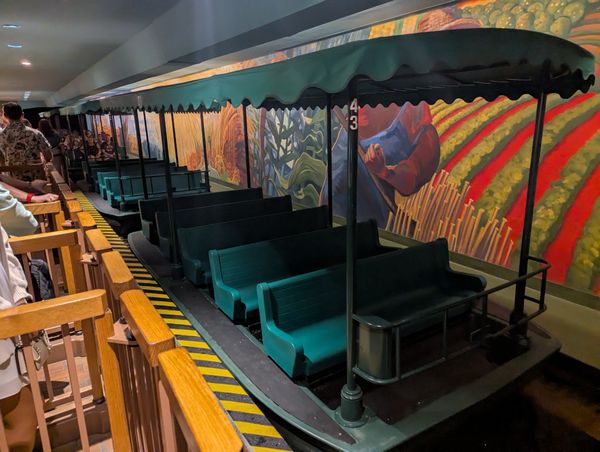
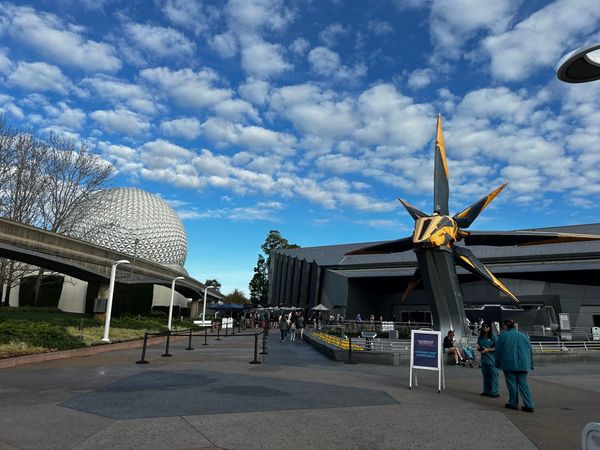
Ratatouille came out the year after the deal, and it's the film from this run you can ride at Walt Disney World. Remy's Ratatouille Adventure opened on October 1, 2021, as the resort's 50th anniversary celebration kicked off, in a newly expanded France pavilion at EPCOT. The ride shrinks you to Remy's size for a chase through Gusteau's restaurant, and Disney's own tour of the expansion points out the small film details hidden around it.
Chapter 6 picks up after Coco: the sequels, the new originals and what Pixar has announced next.
Look for it next trip
Remy’s Ratatouille Adventure
Where: EPCOT, the France pavilion in World Showcase
What to spot: The lit-up Gusteau’s sign in the distance, then Chef Skinner’s scooter, Colette’s motorbike and a manhole cover near the fountain that nods to the film’s sewer scene. There’s no height requirement, so the whole family can shrink to Remy’s size together.
Sources
- Form 8-K on Iger as CEO, Disney, 2005
- Disney to Acquire Pixar, Disney and Pixar, 2006
- Disney Completes Pixar Acquisition, Disney, 2006
- Pixar shareholders approve deal, Associated Press, 2006
- Disney Tries to Keep the Animated Hits Coming, ABC News, 2006
- Disney completes purchase of Pixar, Reuters, 2006
- Academy Awards, oscars.org: 2008, 2009, 2010, 2011, 2013, 2016, 2018
- First animated film to gross $1 billion, Guinness World Records
- Toy Story 3 crosses $1B, TheWrap, 2010
- Box Office Mojo: Ratatouille, WALL-E, Up, Toy Story 3, Brave, Inside Out, Coco
- The Numbers: Ratatouille, WALL-E, Up, Toy Story 3, Brave, Inside Out, Coco
- Lasseter to step down, Associated Press, 2018
- Remy’s Ratatouille Adventure, Walt Disney World
- All in the Details, Disney Parks Blog, 2021
- Ride officially opens, FOX 35 Orlando, 2021
- CPI-U, Bureau of Labor Statistics, 2026